A cross-platform AI-powered intelligence platform with realtime voice chat, cloud code execution, smart connectors, and autonomous task orchestration.
From everyday tasks to complex creative projects — just describe what you need. Clio handles the rest.
Real creations made entirely by AI through Clio — songs, podcasts, games, and apps. Every link is live, shareable, and playable right now.
Idle clicker game · 15 buildings · 60+ upgrades · leaderboard
Play Now →Classic snake · neon skins · achievements · Web Audio
Play Now →Card strategy game · deck building · battles
Play Now →Habit tracker · heatmap · stats · cloud sync
Open App →Recipe website · techniques · temp guides · pairings
View Site →Startup idea discovery · swipe UI · categories · saves
Open App →All content generated by Clio's AI cloud execution engine · Shareable via permanent URLs
Every string, label, and notification — professionally translated across 12 languages with AI-assisted localization workflows and automated ARB file synchronization.
Powered by /add-strings and /sync-arb Claude Code skills
From pixel to cloud, every layer is purpose-built for intelligence-first computing.
Choose the right model for every task. From fast lightweight inference to deep reasoning, Clio dynamically routes across OpenAI, Anthropic, and Google.
GPT 5.5 Pro for deep reasoning. GPT 5.5 for balanced tasks. GPT Mini for speed. GPT Nano for edge.
Claude Opus for maximum capability. Sonnet for the sweet spot. Haiku for blazing fast responses.
Gemini Pro for advanced multimodal tasks. Gemini Flash for cost-effective real-time processing.
Every model has access to a rich tool ecosystem. From note management to cloud code execution, the AI doesn't just talk — it acts.
Before the main AI even starts thinking, Clio fires a lightning-fast parallel call to Claude Haiku that breaks any request into 2–6 concrete steps in under 3 seconds. Users see progress indicators immediately — "Step 1 of 4: Researching topic" — while the primary model works in the background.
As the main AI fires tool calls, a keyword-matching engine reconciles predicted triage steps with actual actions. Completed steps animate in real-time. Unexpected steps are added dynamically. The result: users always know exactly where they are in the process.
Full-duplex voice conversations over WebSocket. The AI listens, thinks, and responds with natural speech — no button presses, no waiting.
WebSocket-based full-duplex streaming with server-side VAD. 24kHz PCM audio for studio-quality voice interaction.
Google's multimodal realtime API. Native video streaming support with visual understanding and analysis.
Fifteen dedicated managers handle session lifecycle, recording, playback, audio config, events, prompts, logging, provider factory, and voice configuration independently.
Every mode uses server-side semantic VAD for turn detection. The difference is when the microphone is active — and what controls it.
The mic stays open at all times. Audio streams uninterrupted to the Realtime API while server-side VAD detects natural turn boundaries. Ideal for fast-paced, back-and-forth conversations.
The recorder stops when the AI starts speaking and resumes when it finishes. Prevents echo feedback loops and avoids accidental interruptions. Bluetooth SCO is preserved for instant mic resume.
On-device speech recognition listens for “Hey Clio” (30+ variant patterns), then hands the mic to the Realtime API. Auto-mutes after 5 seconds of silence. Works across the entire app.
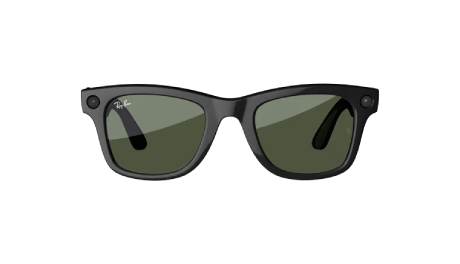
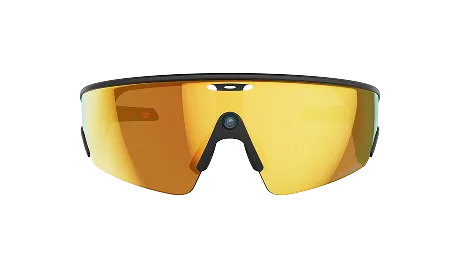
Deep integration with Meta's Device Access Toolkit. Clio streams live video from your Ray-Ban Meta glasses, analyzes what you see, and responds with voice — all hands-free.
Just say "Hey Clio, use my glasses" during a voice chat. The AI activates your smart glasses, starts streaming the camera feed, switches to the glasses microphone, and begins seeing what you see — all through a single voice command.
Custom-built meta_wearables_flutter package with native Swift (iOS) and Kotlin (Android) bridges to Meta's Device Access Toolkit SDK.
Unified camera abstraction supporting phone rear/front cameras and Meta glasses. Manages live mode, photo capture, and frame streaming to AI.
Seamless audio source switching between phone and glasses microphone. Handles BT pairing, reconnection, and audio routing for hands-free AI voice interaction.
// Meta Smart Glasses Data Flow Meta Glasses → Bluetooth → meta_wearables_flutter (native plugin) ↓ StreamSessionManager → Camera frames + audio stream ↓ VisualInsightManager → Frame capture + source switching ↓ RealtimeAIManager → activate_smart_glasses tool (voice-activated) ↓ AI Vision → "I can see what you're seeing through your glasses"
Complex AI tasks run in isolated E2B sandboxes with full Python, Node.js, and CLI environments. An LLM orchestrator loop calls tools iteratively until the job is done.
Lightweight tasks run directly on-device for instant response. Notes, search, reminders, TTS, location, camera analysis — all handled locally with zero latency.
Create, search, edit notes in local Supabase cache
Platform-native TTS with flutter_soloud audio engine
Geocoding, weather via Open-Meteo, location caching
VisualInsightManager for real-time visual understanding
Native calendar and local notification integration
Heavy computation runs in isolated E2B sandboxes. The orchestrator calls the LLM in a loop, executing code and tools iteratively until the task is complete.
Magazine-quality PDFs with 19 themes via clio_pdf
Full HTML/CSS/JS sites, deployed to custom domain
pandas, numpy, matplotlib, plotly in isolated Python
Gemini Search Grounding via clio_search module
AI images, podcasts, game creation with pre-built engines
A dispatch → sandbox → orchestrate → deliver pipeline that turns natural language into production artifacts.
Client sends task via JWT-authenticated edge function. Sandbox VM is created with pre-warmed environment.
Edge function writes .env, deploys custom modules (clio_pdf, clio_search, etc.), installs deps, starts orchestrator.
LLM loop calls tools iteratively — execute code, browse web, generate docs — until task is complete.
Artifacts upload to Supabase storage. Websites served via custom domain. Client gets realtime progress updates.
Deep integrations with Google Workspace and smart hardware. The AI doesn't just know things — it can act across your entire digital life.
Search, read, send, reply, draft, archive, star, label. Full email management through 13 dedicated tools.
Search, read, create, update, rename, move, copy, delete, share files and manage permissions.
Get, create, quick-add, update, and delete events. Smart scheduling with AI-powered time management.
Custom native plugin with Swift/Kotlin bridges. Bluetooth pairing, camera streaming, and audio routing for hands-free AI.
AI-powered music and visual composition engine. Generates soundscapes, ambient audio, and creative media through intelligent composition.
OpenAI gpt-image-2, DALL-E 3, and Gemini image generation. Multiple providers with automatic fallback.
Sora 2/3.1 and Veo 3.1 for AI video creation. Background task queue with progress tracking and moderation optimization.
AI music generation, sound effects, and multi-speaker podcast creation with 8 voice presets and background music.
Push notification delivery on iOS and Android via Firebase Cloud Messaging. Token management and background delivery.
Location-based weather data with 8 condition types, temperature units, and geocoded caching for instant lookups.
Automatic brand detection and logo retrieval for PDF documents. Brand-matched accent colors for editorial-grade output.
Headless browser automation in cloud sandboxes. Web scraping, screenshot capture, and interactive page rendering.
// Smart connector architecture — AI-powered query building GoogleTokenManager → OAuth 2.0 token lifecycle ↓ SmartQueryBuilder → AI translates natural language to API queries ↓ GmailConnector → 14 tools: search, read, send, reply, draft, label... DriveConnector → 11 tools: search, read, create, update, share... CalendarConnector → 5 tools: get, create, quick-add, update, delete // Independent integration — not part of Google OAuth flow MuseGenConnector → AI music + visual composition (independent integration)
Clio exposes its entire intelligence layer via MCP (Model Context Protocol). Any compatible AI client can access your notes, drive files, cloud tasks, and artifacts through a secure OAuth 2.0 connection.
Streamable HTTP
Business / Enterprise
SSE Transport
IDE Integration
CLI Agent
Copilot Extension
AI IDE
Open Standard
search, create, edit, get, list, delete, pin, and tag notes. Full-text Postgres search with multi-stage fallback.
Search, read, create, delete, upload, and browse Drive files and folders through Clio's OAuth credentials.
Dispatch AI creation jobs, monitor real-time progress, retrieve step-by-step logs, and cancel running sandboxes.
List, get, and delete generated artifacts. HTML gets permanent shareable URLs; others get signed URLs.
Search and browse conversation history. Save messages for cross-client continuity.
User profile with stats, AI context builder, and image gallery search for generated media.
// MCP Server Architecture — mcp.clioapp.io Transport POST /mcp → Streamable HTTP (JSON-RPC + SSE responses) GET /mcp/sse → Legacy SSE (backwards compatible) POST /api/tools → REST API fallback (Bearer token) Auth OAuth 2.0 + PKCE → Google Sign-In via Clio account Access Token → 1 hour TTL, JWT signed Refresh Token → 30 day TTL, auto-rotate Scopes → notes:read, notes:write, notes:delete Deployment Azure Container Apps → Node.js 20 + Hono + TypeScript Rate Limiting → 100 req/min per user
From magazine-quality PDFs to interactive websites, AI-generated images to multi-speaker podcasts — Clio's creative engine handles it all.
19 editorial-grade themes (11 dark, 8 light). Dual-variant output: A4 desktop + responsive mobile. Automatic brand detection with Clearbit logos.
Full HTML/CSS/JS generation with custom backend SDK, game engine, and modal UI library. Published to custom domain with shareable URLs.
HTML5 canvas game engine with unified input, entity system, collision detection, physics, Web Audio synth, and scene management.
Multiple AI video providers with background task queue, isolate-based processing, and automatic moderation optimization.
Industry-leading video generation from text and image prompts. Moderation-optimized pipeline with automatic prompt rewriting for higher acceptance rates.
Google DeepMind's video generation model. Native integration via Gemini API with automatic provider selection and fallback routing.
Multi-provider image generation with automatic provider selection, parallel generation, and seamless fallback across OpenAI and Google.
OpenAI's most capable image model. Photorealistic output, text rendering, and in-painting support.
Fast, cost-effective image generation. Clio's default provider for all image tasks in chat and sandbox.
Creative image generation with strong prompt adherence. Available as a user-selectable provider option.
Full ElevenLabs API integration for AI-generated music, sound effects, and multi-speaker podcasts. Eight built-in voice presets with distinct personalities — from energetic hosts to warm experts. Optional background music composed by AI.
Scheduled automations run in the background via pg_cron. From daily briefings to periodic data analysis — Clio works while you sleep.
RSS aggregation with AI-powered article summarization. Location-based weather from Open-Meteo. Seven content sections with intelligent caching.
Four-layer notification architecture with FCM push delivery, realtime Supabase subscriptions, in-app banner overlays, and deep link navigation.
Firebase Cloud Messaging for background delivery on iOS and Android.
Supabase realtime subscriptions for instant in-app notification delivery.
Queued overlay banners with auto-dismiss, priority system, and deep link routing.
Platform-native notifications with calendar integration for device-level alerts.
Flutter powers Clio across six platforms from a single Dart codebase. Platform-conditional imports and guards ensure native behavior everywhere.
Native mobile with push notifications, background services, camera access, location, and foreground chat service.
Full desktop experience with keyboard shortcuts, windowed layouts, and native file system access.
Progressive web app with responsive layouts, web-safe audio handling, and Azure App Service deployment.
Deno-powered edge functions running on Supabase. JWT-authenticated, rate-limited, and deployed globally.
493,000+ lines of production code across 12 languages, 6 platforms, and 41 serverless functions — built and maintained by a single developer using AI-agentic development workflows powered by Claude Code.
Anthropic's Claude Code CLI is the engine room of Clio's development. Parallel subagents research and implement across multiple files simultaneously. Custom skills automate repetitive workflows. Specialized agents encode deep subsystem knowledge so the AI understands Clio's architecture as intimately as its creator.
Slash commands and plugins that automate everything from code review to multi-language localization to infrastructure deployment. Each encapsulates domain expertise that would otherwise require a specialized team member.
Scans changed Dart files against all 25 documented common mistakes and Clio best practices. Catches theme violations, missing dispose calls, hardcoded strings, and platform guard errors.
Adds localized strings across all 12 ARB language files with AI-generated translations, placeholder support, plural forms, metadata, and automatic code regeneration.
Runs flutter analyze (zero errors required), validates template literals, audits AI prompt synchronization, merges safely. Prints deploy commands but never pushes.
Checks template literal wrappers in buildOrchestratorScript() for escaping traps — unescaped backticks, regex newlines, apostrophes, interpolation — that cause sandbox crashes.
Verifies all 8 AI prompt locations are synchronized — text chat, voice chat, cloud orchestrator, and tool definitions across OpenAI, Claude, and Gemini APIs.
Deploys all 41 Supabase edge functions and pushes pending database migrations in one command. Handles function-level dependency ordering.
Rebuilds and publishes the E2B sandbox template with 50+ Python packages, Node modules, CLI tools, custom fonts, and pre-warmed imports.
Finds keys in app_en.arb missing from other language files (DE, ES, FR, JA, PT, RU, ZH, HI, TH, AR, KO), generates translations, and regenerates the localization layer.
Counts real codebase stats (lines of code, files, screens, services, edge functions) and updates every location in the architecture page across all 12 languages.
Plugin that guides creation of distinctive, production-grade frontend interfaces. Enforces bold typography, intentional color palettes, scroll-triggered animations, and avoids generic AI aesthetics.
Validates the Meta Wearables SDK integration — Info.plist config, Swift code, URL callbacks, permissions, streaming, audio, and Android manifest against official docs.
Fetches and merges origin/master into the current worktree branch. Updates skills, agents, settings, and source code. Use --all to batch-update all local worktrees at once.
Generates a magazine-quality HTML news brief with AI-curated articles, summaries, and visual layouts. Optionally accepts a topic for a focused deep dive.

Each agent encapsulates deep subsystem knowledge — architecture patterns, API contracts, edge cases, and anti-patterns — so the AI understands every corner of the codebase as deeply as its developer.
Auto-installed and cached on every session start via a custom SessionStart hook. Zero manual setup — the environment bootstraps itself in seconds.
Every merge to master triggers Azure Pipelines. Four parallel build stages compile, sign, and auto-publish to 3 app stores and the MCP server simultaneously.
flutter build web
flutter build appbundle
flutter build ipa
Docker container
# Azure Pipelines — Parallel Build & Auto-Publish trigger: master version: 1.3.$(patch) # auto-incremented stages: Web → flutter build web → Azure App Service (clioapp.io) Android → Java 17 → signed AAB → Google Play Store iOS → macOS-15 runner → flutter build ipa → App Store Connect MCP → Docker build → Azure Container Apps (mcp.clioapp.io) # All four stages run in parallel # Secure signing via pipeline variables # Zero-touch deployment from merge to 3 stores + MCP server
Cross-platform. Multi-model AI. Realtime voice. Smart glasses. Cloud execution. MCP connectivity. Autonomous operations. This is Clio.